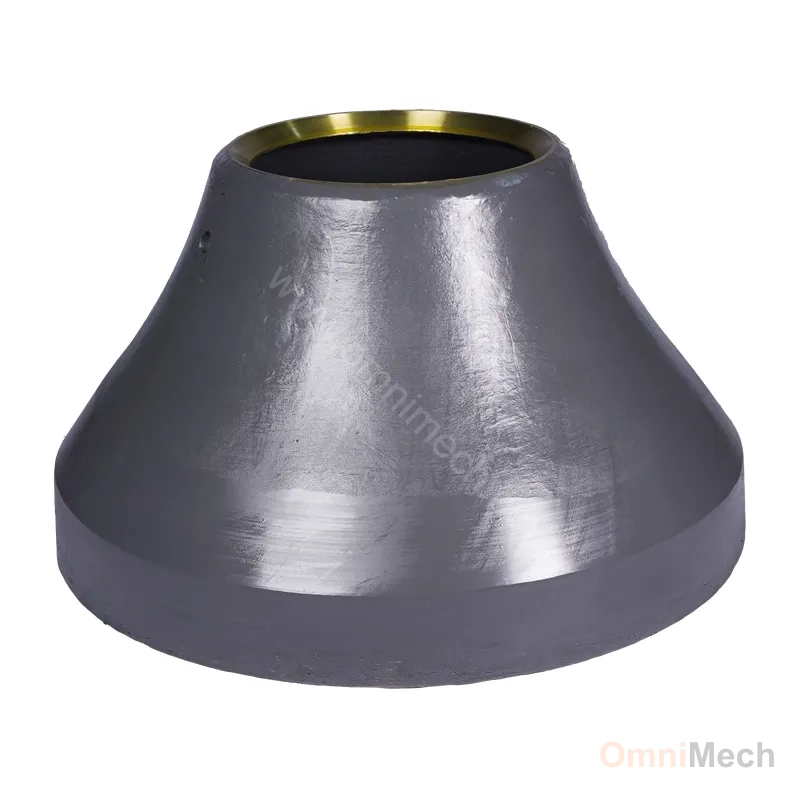
Cone Crusher Mantles: Complete Guide 2026 - Selection, Replacement & AI Monitoring
Table of Contents
- Introduction: The Critical Role of Mantles in Cone Crushers
- Understanding Mantle Types: From Standard to Specialized Profiles
- Material Selection Guide: Choosing the Right Alloy for Your Application
- Signs Your Mantle Needs Replacement: Beyond Visual Inspection
- Mantle Replacement Process: Step-by-Step Guide
- Mantle Life Extension Techniques: Practical Strategies
- AI-Powered Wear Monitoring: 2026 Industry Breakthrough
- Mantle Selection by Crusher Brand: Compatible Models
- Real-World Case Study: Optimizing Mantle Performance
- FAQ: Common Mantle Questions Answered
- Conclusion: Future-Proofing Your Cone Crusher Operations
Introduction: The Critical Role of Mantles in Cone Crushers
As a mining maintenance engineer with 18 years of experience, I’ve witnessed firsthand how a high-quality cone crusher mantle can dramatically impact crushing efficiency and operational costs. Mantles are the heart of any cone crusher, responsible for the primary crushing action that reduces material to the desired size.
In 2026, the importance of mantle optimization has reached new heights. With mining operations facing increasing pressure to reduce downtime, lower operating costs, and minimize environmental impact, the humble mantle has become a focal point for operational excellence.
Why Mantle Performance Matters
- Production Efficiency: Worn mantles can reduce throughput by up to 25%
- Energy Consumption: Damaged mantles increase power draw by 10-20%
- Maintenance Costs: Unplanned downtime for emergency replacements can cost $8,000-$40,000 per day
- Product Quality: Inconsistent crushing affects downstream processes and final product specifications
- Safety: Failed mantles can cause catastrophic equipment damage and safety hazards
Understanding Mantle Types: From Standard to Specialized Profiles
Mantles come in various profiles and designs to suit different crushing applications. Understanding the differences is crucial for optimal performance:
Standard Mantle Profiles
| Profile Type | Application | Key Features |
|---|---|---|
| Standard | General secondary crushing | Balanced wear life and throughput |
| Short Head | Fine crushing | Smaller discharge opening, better particle shape |
| Coarse | Primary cone crushing | Larger feed opening, higher throughput |
| Extra Fine | Tertiary crushing | Very small discharge opening, precise particle size |
Specialized Mantle Designs
High-Efficiency Mantles
- Optimized geometry for maximum throughput
- Enhanced crushing chamber design
- Reduced power consumption
Extended Life Mantles
- Thickened wear areas
- Reinforced stress points
- Special alloy formulations
Custom Profiles
- Tailored to specific material characteristics
- Designed for unique crushing requirements
- Engineered for specific crusher models
Material Selection Guide: Choosing the Right Alloy for Your Application
The material composition of your mantles directly impacts their performance, lifespan, and cost-effectiveness. Let’s break down the most common materials used in 2026:
| Material Type | Hardness (HRC) | Wear Resistance | Impact Toughness | Typical Lifespan | Best Application |
|---|---|---|---|---|---|
| Mn13Cr2 | 45-50 | High | Excellent | 400-600 hours | General purpose, medium-hard materials |
| Mn18Cr2 | 48-52 | Very High | Good | 500-700 hours | Abrasive materials, high production |
| High Chrome Iron | 55-60 | Exceptional | Moderate | 600-900 hours | Highly abrasive materials |
| Martensitic Steel | 50-55 | Good | Very Good | 350-550 hours | Mixed material applications |
| Ni-Hard | 58-62 | Outstanding | Low | 700-1000 hours | Extremely abrasive materials |
Material Selection Considerations
When selecting mantle materials, consider:
- Material being crushed: Hardness, abrasiveness, and moisture content
- Crusher size and capacity: Larger crushers require more robust materials
- Operating conditions: Temperature, humidity, and duty cycle
- Budget constraints: Higher-performance materials come at a premium
- Crushing stage: Primary, secondary, or tertiary
Signs Your Mantle Needs Replacement: Beyond Visual Inspection
Many maintenance teams rely solely on visual inspection to determine when to replace mantles, but this approach often leads to either premature replacements (wasting money) or delayed replacements (risking equipment damage).
Key Replacement Indicators
Visual Wear Patterns
- Uneven wear across the mantle surface
- Deep grooves or indentations
- Cracks or fractures, especially at stress points
- Loss of tooth profile or serration
Performance Metrics
- Decreased throughput (measured in tons/hour)
- Increased power consumption
- Larger-than-spec product size
- Higher vibration levels
- Increased frequency of crusher overloads
AI-Enhanced Monitoring Data (2026 Technology)
- Real-time wear rate analysis
- Predicted remaining useful life
- Anomaly detection for potential failures
- Optimal replacement timing recommendations
Replacement Thresholds
| Crusher Size | Minimum Thickness (mm) | Replacement Indicator |
|---|---|---|
| Small (≤300HP) | 25 | 70% original thickness |
| Medium (300-600HP) | 35 | 65% original thickness |
| Large (≥600HP) | 45 | 60% original thickness |
Mantle Replacement Process: Step-by-Step Guide
Proper installation is critical to maximize mantle lifespan and ensure safe operation. Follow this comprehensive guide:
Pre-Replacement Preparation
Safety First
- Lockout/tagout the crusher
- Wear appropriate PPE (gloves, safety glasses, steel-toe boots)
- Ensure a clear work area with adequate lighting
- Use proper lifting equipment for heavy mantles
Tools Required
- Torque wrench (calibrated)
- Socket set
- Hydraulic jack (for larger crushers)
- Wire brush
- Anti-seize compound
- Gasket material (if needed)
- Measuring tools (calipers, tape measure)
Replacement Steps
Remove Old Mantle
- Loosen and remove hold-down bolts
- Carefully lift mantle away from the cone
- Inspect the cone for damage or wear
- Clean the mounting surface thoroughly
- Check for any cracks or damage to the cone
Prepare New Mantle
- Verify part numbers match crusher specifications
- Inspect new mantle for defects
- Apply anti-seize to bolt threads
- Check mantle weight and balance
Install New Mantle
- Position mantle correctly (check for directional arrows)
- Hand-tighten bolts in a crisscross pattern
- Torque bolts to manufacturer specifications
- Double-check alignment and clearance
- Verify proper seating of the mantle
Post-Installation Checks
- Perform a dry run without material
- Monitor for unusual vibrations or noises
- Check bolt tightness after 8 hours of operation
- Verify crushing chamber geometry
Safety Warnings
- Never attempt to replace mantles while the crusher is energized
- Always use proper lifting equipment for heavy mantles
- Follow manufacturer torque specifications exactly
- Never reuse worn bolts or fasteners
- Ensure all safety guards are in place before testing
Mantle Life Extension Techniques: Practical Strategies
Extending the lifespan of your mantles can significantly reduce operating costs and minimize downtime. Here are proven techniques:
Operational Best Practices
Proper Feed Control
- Maintain consistent feed rate
- Avoid overfeeding or underfeeding
- Remove tramp metal before it reaches the crusher
- Ensure uniform feed distribution
Optimal Crusher Settings
- Adjust closed side setting (CSS) according to material requirements
- Maintain proper eccentric speed
- Balance production requirements with wear rate
- Regularly check and adjust mantle clearance
Regular Maintenance
- Inspect mantles daily during operation
- Monitor wear patterns and document changes
- Keep crusher components properly lubricated
- Address minor issues before they become major problems
Advanced Techniques
AI-Powered Predictive Maintenance
- Implement sensor-based wear monitoring
- Use machine learning algorithms to predict replacement timing
- Optimize maintenance schedules based on actual wear data
- Receive early warnings for potential issues
Material Selection Optimization
- Match mantle material to specific application requirements
- Consider custom alloy formulations for unique challenges
- Evaluate wear rate data to refine material choices
- Test different materials in controlled conditions
Mantle Design Enhancement
- Use computer-aided design (CAD) for optimal geometry
- Implement finite element analysis (FEA) for stress optimization
- Consider specialized surface treatments for enhanced wear resistance
- Collaborate with suppliers on custom designs
AI-Powered Wear Monitoring: 2026 Industry Breakthrough
The year 2026 has seen significant advancements in AI-powered wear monitoring for cone crusher components, particularly mantles.
Key Technologies
Sensor Integration
- Embedded strain gauges to measure stress
- Acoustic sensors to detect abnormal vibrations
- Thermal imaging to identify hot spots
- Load cells to monitor crushing forces
Data Analytics Platforms
- Real-time wear rate calculation
- Predictive maintenance scheduling
- Anomaly detection algorithms
- Wear pattern analysis
IoT Connectivity
- Remote monitoring capabilities
- Cloud-based data storage and analysis
- Integration with enterprise asset management systems
- Mobile alerts for maintenance teams
Benefits of AI Monitoring
- 35-45% reduction in unplanned downtime
- 30-40% extension in mantle lifespan
- 20-30% reduction in maintenance costs
- Improved safety through early fault detection
- Data-driven decision making for maintenance planning
Mantle Selection by Crusher Brand: Compatible Models
Selecting the right mantle for your specific crusher brand and model is crucial for optimal performance. Here’s a comprehensive guide:
International Brands
| Brand | Model Series | Recommended Mantle Type |
|---|---|---|
| Metso | HP Series | High-efficiency profiles |
| Metso | GP Series | Standard profiles |
| Metso | MP Series | Heavy-duty profiles |
| Sandvik | CH Series | Precision profiles |
| Sandvik | CS Series | High-performance profiles |
| Sandvik | H Series | Extended life profiles |
| Terex | Cedarapids | Application-specific profiles |
| Kleemann | MOBICONE | Compact crusher profiles |
Domestic Chinese Brands
| Brand | Model Series | Recommended Mantle Type |
|---|---|---|
| SBM | HST Series | High-efficiency profiles |
| SBM | HPT Series | Precision profiles |
| Liming | CS Series | Standard profiles |
| Liming | HPC Series | Heavy-duty profiles |
| CME | HP Series | Application-specific profiles |
| Great Wall | HPC Series | Extended life profiles |
| Shibang | HST Series | High-performance profiles |
Real-World Case Study: Optimizing Mantle Performance
Challenge
A large mining operation in Western Australia was experiencing frequent mantle replacements (every 400-450 hours) when processing iron ore, leading to excessive downtime and high maintenance costs.
Solution
- Material Upgrade: Switched from standard Mn13Cr2 to high chrome iron mantles
- Installation Optimization: Implemented precision alignment procedures
- AI Monitoring: Installed sensor-based wear monitoring system
- Operational Adjustments: Optimized feed rate and CSS settings
- Mantle Design: Collaborated with supplier on custom profile design
Results
- Mantle lifespan increased to 850-900 hours (100% improvement)
- Maintenance costs reduced by 40%
- Production capacity increased by 22%
- Unplanned downtime reduced by 50%
- Energy consumption decreased by 15%
FAQ: Common Mantle Questions Answered
1. How often should I replace my cone crusher mantle?
The replacement frequency depends on several factors, including material being crushed, crusher size, and operating conditions. Typically, mantles should be replaced when they reach 60-70% of their original thickness. With AI monitoring, you can optimize replacement timing based on actual wear data.
2. What’s the difference between a mantle and a concave?
The mantle is the movable wear part attached to the cone, while the concave (or bowl liner) is the stationary wear part. The mantle rotates and gyrates against the concave to crush material. Both components wear over time and should be replaced together for optimal performance.
3. Can I mix different brands of mantles and concaves?
While technically possible, mixing different brands is not recommended. Different manufacturers use different material compositions, heat treatments, and design tolerances that may not be compatible. Always use matching sets from the same supplier for best results.
4. What’s the best material for mantles when crushing abrasive materials?
For highly abrasive materials like granite or iron ore, high chrome iron or Ni-Hard alloys offer the best wear resistance. While these materials have a higher upfront cost, their extended lifespan often makes them more cost-effective in the long run.
5. How does mantle design affect performance?
Mantle design, including tooth profile and geometry, significantly impacts crushing efficiency. Coarser tooth profiles are better for primary crushing, while finer profiles are more suitable for secondary and tertiary applications. The right design can improve throughput by up to 20% and reduce power consumption by 15%.
6. What maintenance practices can extend mantle life?
Regular inspection, proper feeding practices, optimal crusher settings, and timely replacement are key to extending mantle life. Implementing AI-powered wear monitoring can also help optimize maintenance schedules and replacement timing.
7. How does temperature affect mantle performance?
Extreme temperatures can impact mantle performance and lifespan. High temperatures can soften the material, reducing wear resistance, while cold temperatures can increase brittleness. Operating within the manufacturer’s recommended temperature range is crucial.
8. What are the safety considerations when replacing mantles?
Always follow lockout/tagout procedures, wear appropriate PPE, use proper lifting equipment, and follow manufacturer guidelines for installation. Never attempt to replace mantles while the crusher is energized or under load.
9. How do I determine the correct mantle size for my crusher?
Mantle size is determined by the crusher model and chamber configuration. Always refer to the manufacturer’s specifications or consult with your supplier to ensure you select the correct size and profile for your specific crusher.
10. What is the average cost of mantle replacement?
Costs vary significantly based on crusher size, material quality, labor rates, and production downtime. For a medium-sized cone crusher, mantle replacement can cost anywhere from $5,000 to $25,000, including parts and labor. However, proper maintenance and optimal replacement timing can significantly reduce these costs over time.
Conclusion: Future-Proofing Your Cone Crusher Operations
As we navigate the evolving landscape of mining and aggregate production in 2026, mantle optimization remains a critical factor in operational success. By understanding material options, implementing proper maintenance practices, and leveraging advanced technologies like AI monitoring, you can significantly improve cone crusher performance, reduce costs, and minimize downtime.
Key Takeaways
- Select mantle materials based on your specific application requirements
- Implement regular inspection and maintenance schedules
- Consider AI-powered wear monitoring for optimized replacement timing
- Train maintenance teams on proper installation and safety procedures
- Evaluate mantle performance data to continuously improve operations
- Collaborate with suppliers on custom solutions for unique challenges
Download Your Free Mantle Selection Guide
Ready to optimize your cone crusher mantle performance? Download our comprehensive Mantle Selection Guide for 2026, featuring detailed material comparisons, replacement guidelines, and maintenance best practices.
Contact Us for Expert Assistance
Have questions about mantle selection or maintenance? Our team of experienced engineers is ready to help. Contact us today for personalized recommendations and competitive pricing on high-quality mantles designed for your specific application.
Contact OmniMech | View Cone Crusher Parts
Disclaimer: The information provided in this guide is based on industry best practices and real-world experience. Always consult with your equipment manufacturer for specific recommendations regarding your crusher model and application.
Tags:
OmniMech Technical Team
Technical expert at Crusher Parts International with years of experience in the crushing and mining industry.